International ballots and other election souvenirs
Here are photos of some ballots I recently found in storage.
Read more…by Jack Santucci
Here are photos of some ballots I recently found in storage.
Read more…There is some controversy over what to call the various “top-X”/“jungle primary” electoral systems now in vogue. The National Conference of State Legislatures now offers the term “multi-party primary” with the following definition:
Read more…A small but growing number of states hold a single primary in which all candidates, regardless of party, are listed on a single ballot. States vary in the number of candidates who advance out of this primary to the general election…
Elections for Nebraska’s unicameral, nonpartisan legislature closely mirror this process except ballots do not identify the candidates’ party.
Today was primary day in Philly. Below is a portion of the ballot. I found myself relying on the “Vote for not more than X” instructions.
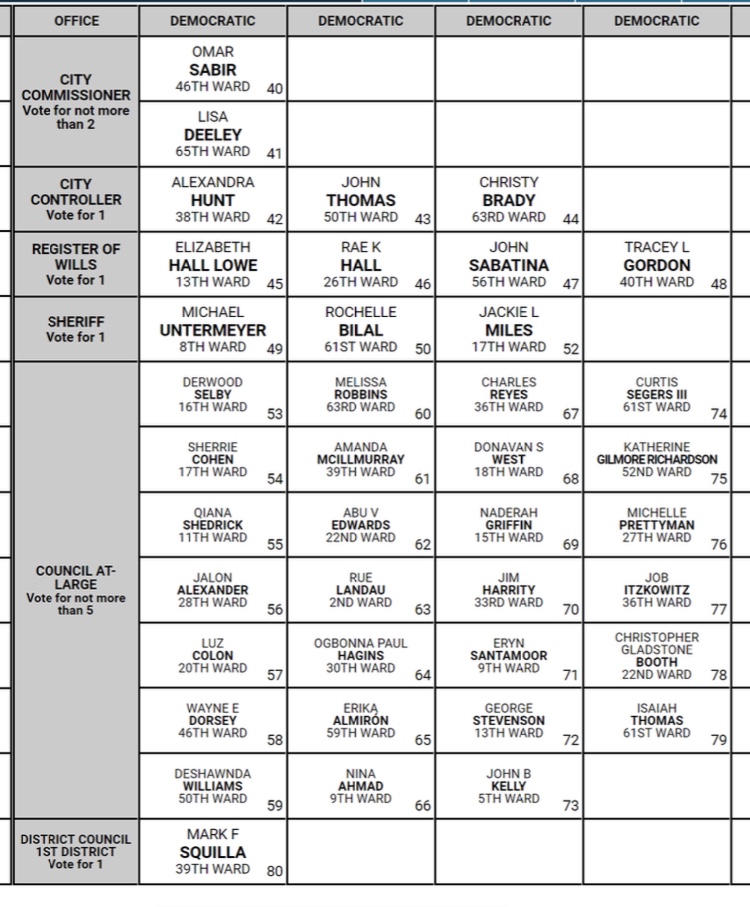
The race of interest is council-at-large. Here we are selecting five Democratic nominees to contest seven seats in November. (No party may give its label to more than five.)
This is where I pitch the “one-vote system.” All of the above candidates could run in the general without spoiling their party. There would be no further need to limit nominations by law. And the act of voting would be more user-friendly.
What did ballots look like in American single transferable vote elections? I can’t find examples, so I am licensing these photos for public use. The ballots are from Worcester, Massachusetts, which held six PR elections, 1949-59. Please tell me if you know of PR ballots from other cities.