DC Initiative 83
Students are asking, so I feel obligated to compile my thoughts. Voting on this begins soon.
Read more…by Jack Santucci
Notes on preferential voting in America, emphasizing developments from about 1990 to present.
Students are asking, so I feel obligated to compile my thoughts. Voting on this begins soon.
Read more…This post’s purpose is to clarify a point I made in this essay about coordination failure under nonpartisan Alternative Vote, AKA “the Alaska system.” I have suggested in a few posts that elaborate single-seat electoral systems do not perform well in high-dimensional policy spaces.
Read more…I came across this sign on a recent visit to Washington, DC.
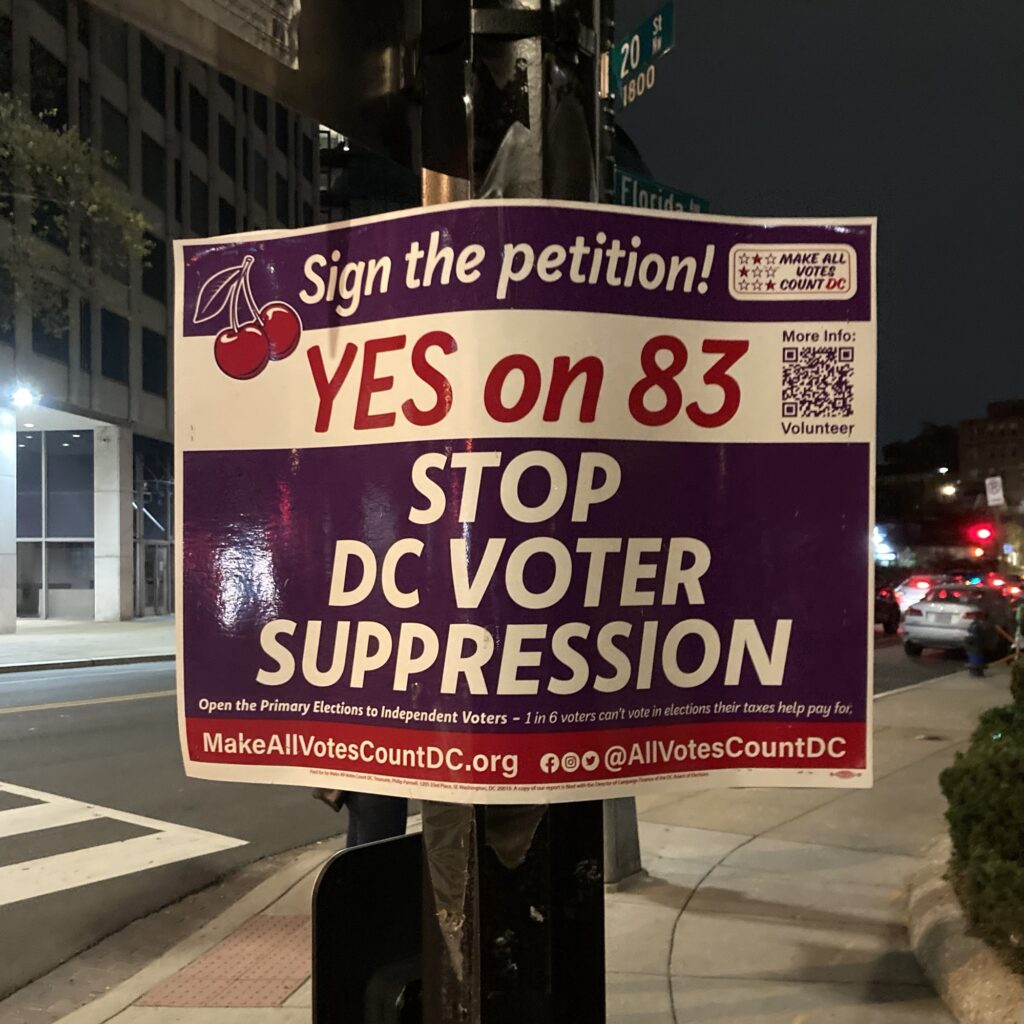
It redefines “voter suppression” as the presence of a nominating primary without instant runoff voting.
Following up on yesterday’s post, here is a brief statement of the legislative reason for the repeal of the single transferable vote in US history. I have no reason think it would not apply to instant runoff as well. Both are fundamentally STV, and both are being promoted as a way to break up parties.
I have written elsewhere that STV opened the possibility of ‘vote leakage.’ Leakage usually refers to votes cast for one party but that help a different one win seats, via the transfer process.
Connecting this phenomenon to STV repeal required tracking leakage between coalitions, not among parties. New York City illustrates the logic. There, votes were expected to leak among a series of anti-Tammany parties.
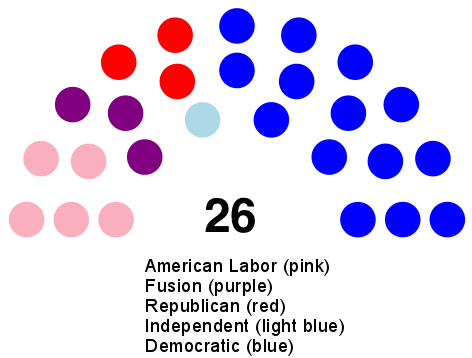
In other cases, local parties were formed to keep votes away from the rumps of parties displaced by the reforms. This was a direct response to problems organizing STV-elected legislatures.
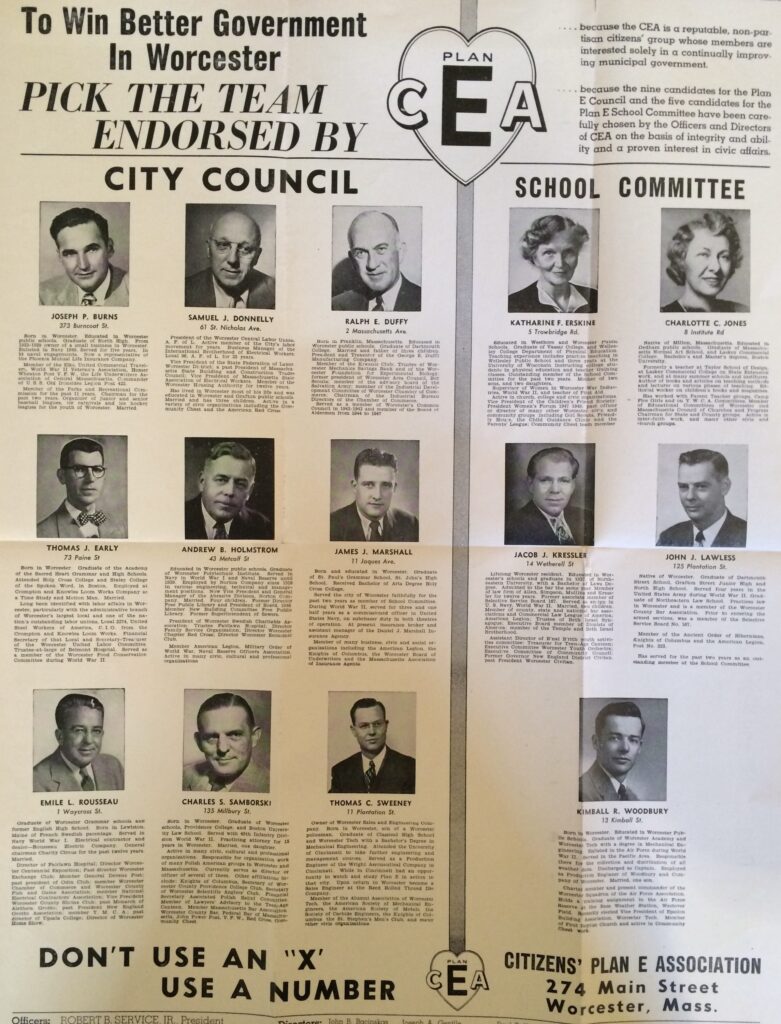
It didn’t work in the long run. Below is my go-to image for introducing people to the problem. It gives the percentage of roll-call votes in each legislative term on which some portion of said local party (Citizens’ Plan E Association or CEA in this case) teamed up with the opposition and thus defeated its own party’s position. This is known as a majority roll when we focus on the majority coalition, which the figure does. The link between the roll rate and STV repeal is clear. Chapter 7 here gives a detailed account of this and other such episodes, linking them to vote leakage as well.

Here’s why this is an issue for advocates. Let’s say the point of current reforms is to bring Republican moderates into coalition with Democrats. That would be analogous to the reason for the CEA above. What the graph shows is the reform failing to bind that coalition. It shows the reform eventually doing the opposite of what it was supposed to do.
This is one reason why I recommended party-list systems and maybe ‘fusion voting’ instead of STV and its derivatives. (Others have been equity and ease of implementation.)
Nick Troiano’s new book is an engaging read. Here are a few thoughts with the caveat that I am still working through it.
1. With Gehl and Porter (2020) it argues for the jungle primary as a way to “fix to our political dysfunction […] without the unlikely passage of new federal laws or constitutional amendments.” So, we are asked to accept the premises that federal-level electoral-system change is a no-go… or at least a long time off… requiring state/local demonstration cases.
2. Readers are assumed to agree that “our political system is broken.” It’s clearly not working well right now, but that could change. I have pressed this point a few times with ‘primary reform’ backers — realignment itself is a path ‘out.’ That would be a case of our so-called Madisonian system doing what it was expected to do.
3. Do benefits of the proposed reforms therefore outweigh the costs? I am not a fan of utilitarian moral reasoning, but I do appreciate that leaders sometimes have to engage in it. So, my last two points cover costs.
4. The book claims an absence of “any credible research” that RCV has disparate impact, in whatever terms, on communities of color. This is overly dismissive (at best). I encourage readers to come to their own conclusions after an hour or two with Google Scholar.
5. The book attributes to me (p. 137) the same conventional wisdom I sought to challenge with respect to STV’s repeal. So, two years’ getting and punching archival data into Excel seems to have left that debate where it was before the work began in 2014. Addendum: here is what I actually argued.
6. There are a few invocations of the one-dimensional spatial perspective. That is to be expected in a work of advocacy. It might even be expected when political scientists get called on to redesign institutions. Analytic work on electoral reform, however, has been moving away from this perspective.
As I said, I am still reading, and the book is engaging.